
Sprain vs. Strain
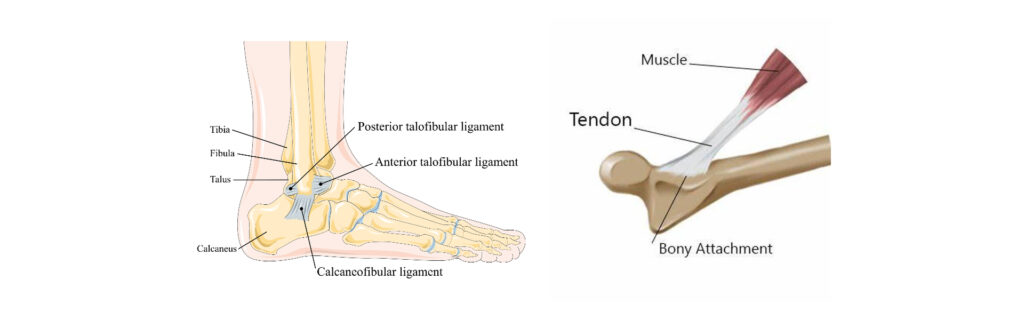
Have you ever been to your doctor and been diagnosed with a sprained ankle, or a strained muscle? What is the difference, and what does this mean?
Sprain refers to an injury to a ligament. A ligament if fiborous connective tissue that connects a bone to a bone. It serves to hold the joint together and provide stability.
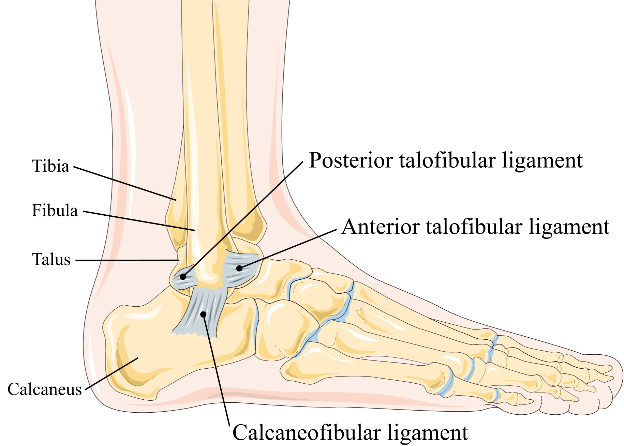
A sprain occurs when ligaments are overstretched. The most common example is when you roll your ankle. (2)
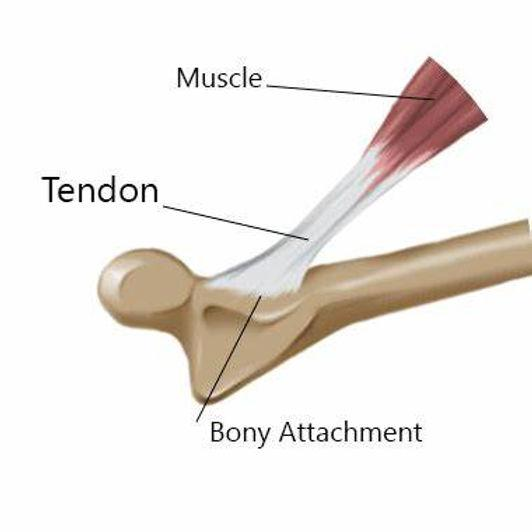
A strain is very similar to a sprain but refers to an overstretching of a muscle or tendon. Tendons are heavy bands of fiborous tissue that connect a muscle to a bone. (2) Tendons transmit the energy produced by a muscle contraction to move the skeleton.
Sprains and strains share similar symptoms which include (3):
- Pain (the most common)
- Swelling
- Loss of movement
Sprains and strains are also graded based on severity (4 & 5):
- Grade 1: mild damage to muscle/tendon or ligament fibers (less than 5%). This may cause minimal loss of strength and motion.
- Grade 2: more extensive damage, however, there is not a complete rupture. There is often more pain and swelling than a Grade 1 sprain/strain.
- Grade 3: complete rupture of a muscle/tendon or ligament. At the time of injury there is often a lot of pain, but this usually subsides. There will be significant loss of strength and range of motion.
Most grade 1 and 2 sprains and strains do not require surgery. In some cases surgery may be required for a Grade 3 strain. Physiotherapy can help with reducing pain and swelling, improving range of motion and strength in that area. If you have any further questions, or would like to reach out to book an appointment, we would be happy to schedule you in to one of clinics!
References:
- https://en.wikipedia.org/wiki/Lateral_collateral_ligament_of_ankle_joint
- https://www.centerfororthosurgery.com/sprain-vs-strain/
- https://www.sunburyphysiotherapy.com.au/post/why-do-tendon-injuries-take-so-long-to-heal
- https://specialtyorthony.com/2019/09/blog/what-are-the-three-types-of-sprains/
- https://www.hss.edu/conditions_muscle-strain.asp